

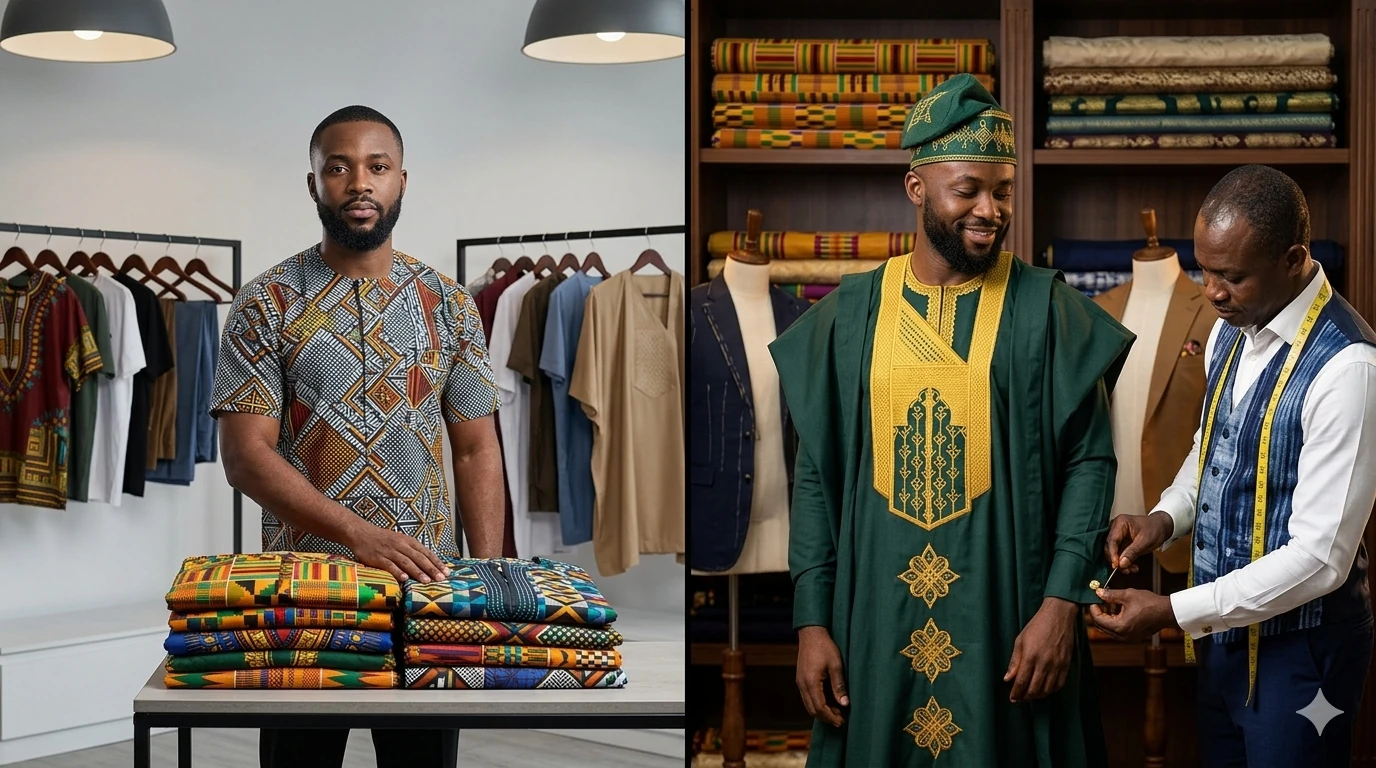

Pick up an agbada off a rack, and there’s a good chance something about it won’t sit right — the shoulders too wide, the sleeves a little long, the chest panel sitting slightly off-center once it’s actually on a body instead of a hanger. That’s not bad luck. It’s what happens when a garment built for draping and proportion gets squeezed into a generic small-medium-large system that was never really designed for it.
Why Sizing Charts Struggle With Traditional Wear
Western sizing works reasonably well for fitted clothing, where a few standard measurements cover most bodies closely enough. Agbada, senator wear, and similar traditional pieces don’t follow that same logic. They depend on flow, drape, and exact proportion between shoulder, chest, and sleeve to look the way they’re supposed to look. A size that’s “close enough” on a shirt becomes very noticeable on a flowing garment, where extra fabric in the wrong place changes the whole silhouette instead of just feeling a bit loose.
This is the gap bespoke tailoring exists to close. It’s not a luxury add-on — for this category of clothing, it’s closer to a requirement for getting the proportions actually right.
What Changes When Every Measurement Is Yours
A bespoke piece starts from your actual numbers — chest, shoulders, sleeve length, neck, all taken directly rather than assumed from a size label. That sounds simple, but it changes everything downstream. The embroidery panel sits exactly where it should on your chest instead of drifting based on whoever the “medium” was designed around. The sleeve ends at your wrist, not somewhere past it. The collar sits at your neck instead of gaping or choking depending on which way the generic sizing happened to miss.
None of this requires anything dramatic from you. It just requires accurate measurements taken once, properly, and used to build the piece around your body instead of the other way around.
How the SNOD Booking Process Actually Works
Getting measured doesn’t have to mean guesswork at home with a tape measure, although that’s always an option if you’d rather handle it yourself. SNOD’s measurement booking makes it easy to have it done properly and in person — you book a slot, come in, and someone experienced takes every measurement that matters, including the ones that are genuinely hard to get right alone, like shoulder width and back length.
It’s a short appointment, but it’s the part of the process that determines whether the finished piece fits the way it’s supposed to. Skipping it, or rushing through it, is usually where off-the-rack disappointment starts in the first place.
Fabric and Detail, Chosen With You — Not Assumed For You
Bespoke isn’t only about fit. It’s also a conversation about what the piece is actually for. A wedding outfit calls for different fabric and embroidery decisions than something you’ll wear regularly, and that conversation happens before a single cut is made, not after you’ve already committed to whatever a rack happened to stock in your size.
This is also where budget gets discussed honestly — what fabric gives the best look for the occasion, where it’s worth spending a bit more, and where a more affordable choice won’t show. That back-and-forth is something a rack of pre-made garments simply can’t offer, no matter how nice the fabric looks under store lighting.
Bespoke Doesn’t Have to Mean Expensive
There’s a common assumption that made-to-measure automatically costs significantly more than buying off the rack. In practice, the gap is often smaller than people expect, especially once you factor in that a properly fitted piece doesn’t need the alterations a badly fitted off-the-rack one almost always does afterward. Paying once for the right fit tends to work out better than paying twice — once for the garment, and again for a tailor to fix what didn’t fit in the first place.
The Bottom Line
Off-the-rack traditional wear asks you to fit the garment. Bespoke flips that — the garment fits you, because it was built around your actual measurements from the start. For pieces that depend this heavily on proportion and drape, that difference shows up the moment you put it on, not just in how it looks in a mirror but in how it moves and sits through an entire day of wear.
At SNOD, the bespoke process is built around getting that right the first time — book a measurement session, talk through fabric and detail with someone who knows the craft, and walk away with a piece made for your body, not just your size.