

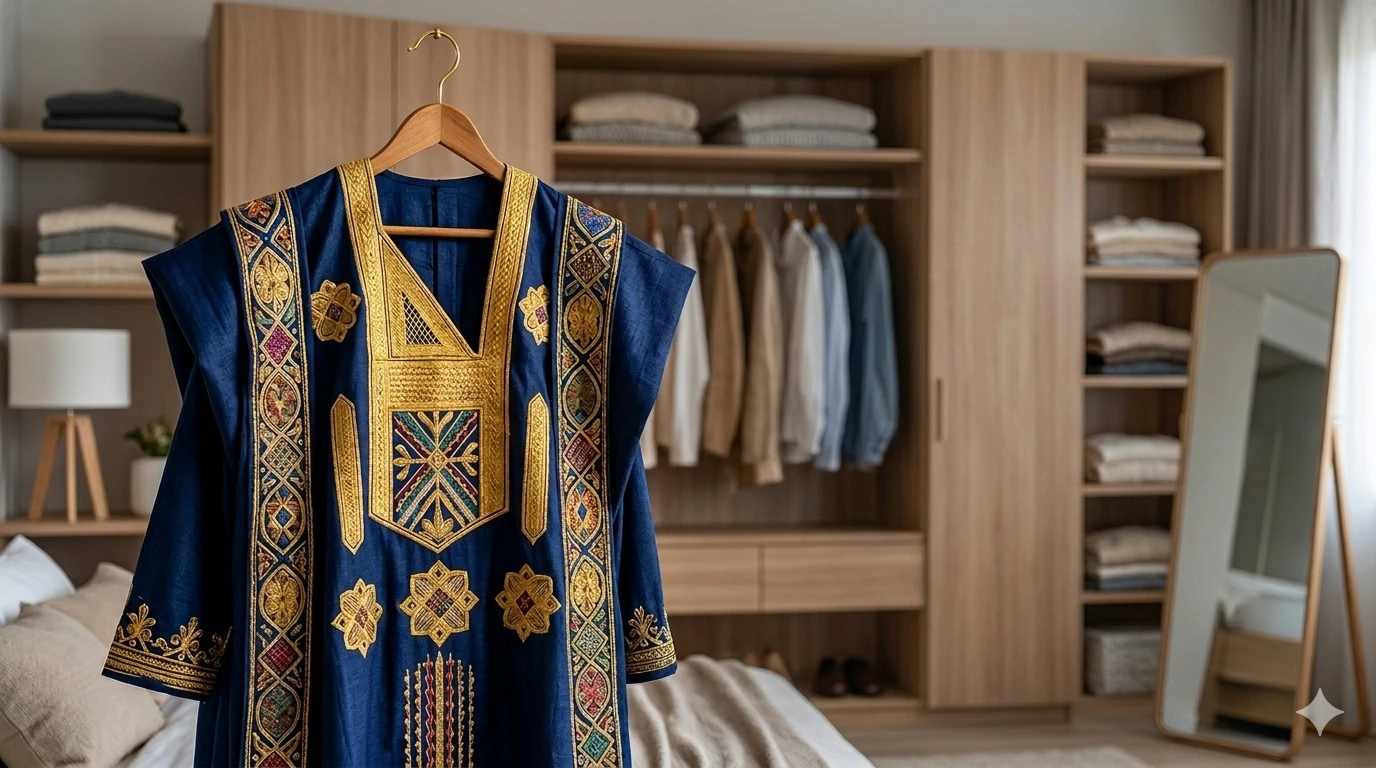

An embroidered agbada isn’t something you wear once and hang back in the closet without a second thought. Between the handwork on the chest, the weight of the fabric, and the time that went into making it, it asks for a bit more attention than your regular shirt. The good news is that caring for it isn’t complicated — it just takes a few habits that protect the stitching and keep the fabric looking the way it did the first day you put it on.
Why Embroidery Needs a Different Approach
Embroidery thread, especially the metallic or heavily worked kind, doesn’t move the same way as the fabric underneath it. It can pull, fray, or lose its shine if it’s handled roughly, washed the wrong way, or left folded in one position for too long. Pair that with the weight of a brocade or cashmere agbada, and you’ve got a garment that rewards patience and punishes shortcuts.
Washing It Without Wrecking the Stitching
Skip the washing machine entirely. The spinning and tumbling pulls at the threads and can leave embroidery looking flat or frayed after just a few washes. Hand washing in cool water is the safer route, and even then, work around the embroidered panel rather than scrubbing directly over it.
For anything heavily embellished, especially with metallic thread, dry cleaning by someone experienced with embroidered fabric is usually the better call. If you go this route, point out the embroidery to whoever’s handling it so they know to treat that area differently, not just steam and press it like the rest of the garment.
If it’s just a light mark or a bit of dust, you often don’t need a full wash at all. A damp cloth dabbed gently over the spot, followed by air drying, can take care of it without putting the whole piece through unnecessary wear.
Drying It the Right Way
Never wring an embroidered agbada or hang it by the embroidered section. Lay it flat on a clean towel, or hang it inside out on a padded hanger, and let it air dry away from direct sunlight. Sun fades color fast, and metallic thread in particular can dull or discolor if it sits in heat for too long.
Ironing and Pressing
Heat is where most embroidery damage actually happens, usually without anyone noticing until it’s too late. Turn the garment inside out before ironing, or lay a clean cloth over the embroidered area so the iron never touches the thread directly. Keep the setting low, and where you can, use steam instead of pressing down hard — embroidery responds better to gentle heat than direct pressure.
Storage That Actually Protects It
How an agbada is stored between wears matters more than people think. A breathable garment bag works far better than sealed plastic, which traps moisture and can cause embroidery thread — gold and silver especially — to tarnish over time. Hang it on a wide, padded hanger so the shoulders keep their shape, and give it room so the embroidery isn’t pressed against other heavy garments.
If you need to fold it for travel, fold along the seams rather than across the embroidered chest panel, and pad the fold with a soft cloth if you can. A small sachet of cedar or lavender nearby also keeps moths away without leaving a chemical smell behind.
Sweat, Stains, and Catching Them Early
Sweat is one of the most common things that quietly damages an agbada over time, particularly around the neckline and underarms. It discolors fabric and weakens thread long before a visible stain shows up. Treat sweat marks soon after wearing rather than letting them sit — a quick spot clean goes a long way. A light dusting of cornstarch or talc on the inside collar before wearing can also help absorb moisture before it becomes a problem.
The same goes for any other stain. The longer something sits on embroidered fabric, the harder it is to lift without affecting the thread around it.
Small Habits That Add Up
Spray perfume or cologne before putting the agbada on, not after — direct contact with embroidery thread can cause it to discolor over time, especially metallic work. Try rotating which agbada you wear instead of reaching for the same one every week; giving the fabric and thread time to rest between wears keeps both looking newer for longer. And if a thread starts to loosen or a sequin comes loose, take it to a tailor early. Small repairs are quick and cheap — a small snag left alone rarely stays small.
The Bottom Line
An embroidered agbada carries real craftsmanship, and a little extra care is what keeps that craftsmanship visible for years instead of fading after a handful of outings. None of this takes much time once it becomes routine — wash gently, dry away from the sun, iron with a barrier between heat and thread, store with room to breathe, and deal with marks while they’re fresh. Treat it well, and it holds its shine through every occasion you wear it to.
At SNOD, every embroidered piece is made to be worn often and worn well. Care for it the same way it was made, and it’ll keep showing up for you.