

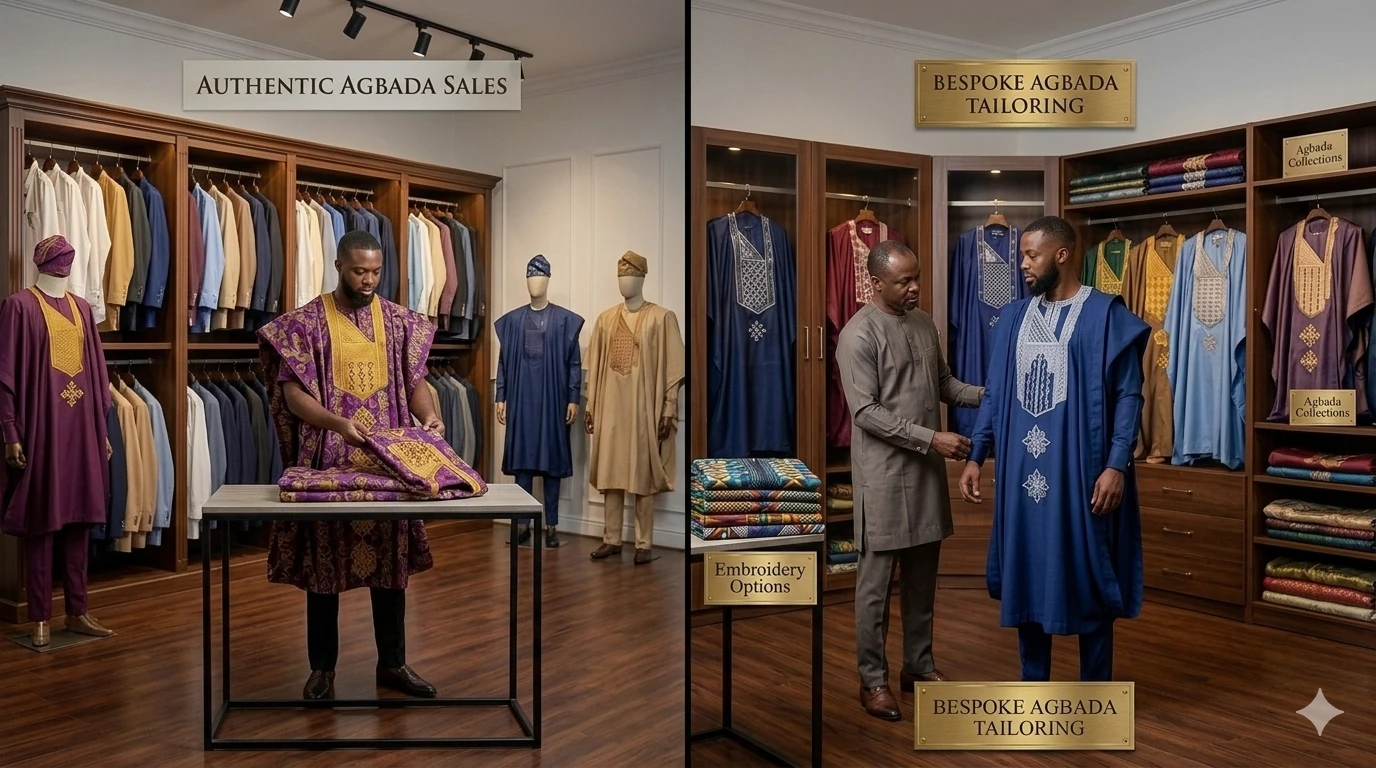

Not every agbada that looks right in a photo holds up the same way in person. The fabric, the stitching, the way the embroidery sits on the chest — these are the things that separate a piece built with real craftsmanship from one that was rushed out to look the part for a few hours under good lighting. Authenticity in an agbada isn’t about a logo or a price tag. It’s in the details most people only notice once something’s gone wrong.
It Starts With the Fabric
A lot of corner-cutting happens before a single stitch is sewn, right at the fabric stage. Thinner, lower-grade material can be passed off as premium under the right lighting and the right marketing, but it shows almost immediately in how the garment drapes, how it photographs in daylight, and how long it lasts before it starts to thin or lose shape.
Real brocade and quality cotton blends have weight and structure that synthetic substitutes simply don’t replicate. That weight is what gives an agbada its flow — the way it moves when you walk, the way the sleeves hang. Sourcing fabric properly, rather than reaching for whatever’s cheapest that week, is the first and most invisible decision that determines whether the finished piece will actually hold up.
Embroidery Is Where Shortcuts Are Easiest to Hide
Embroidery is one of the fastest places to cut costs, and one of the hardest for a buyer to catch before it’s too late. Dense, evenly worked embroidery with quality thread takes real time, whether it’s done by hand or with a machine set up properly for the job. A rushed alternative — thinner thread, spacing that’s looser, patterns that look busy from a distance but unravel under close inspection — can look almost identical in a product photo and fall apart after two or three wears.
The difference usually shows up in places people don’t think to check first: how the thread sits against the fabric, whether it lies flat or puckers the material underneath, how it holds up after the first wash. Good embroidery doesn’t just look good. It stays looking good.
Construction You Can’t See, But Definitely Feel
The actual sewing — seam finishing, how the three pieces of an agbada come together, how the collar and chest panel are reinforced — rarely gets attention because it’s not the part anyone photographs. But it’s the part that determines whether the garment survives a season of regular wear or starts coming apart at the seams within weeks.
Traditional construction techniques exist for a reason. They account for the weight of the fabric, the stress points where movement happens most, and the way the garment is meant to be worn over time, not just for one event. Skipping these steps to save time on production is one of the most common — and least visible — shortcuts in mass-produced traditional wear.
Fit Is Part of Authenticity Too
A genuinely well-made agbada is also one that’s actually proportioned to the person wearing it. Mass production solves this by guessing at a handful of generic sizes and hoping most people fall close enough. That guess is exactly where a lot of off-the-rack pieces fall short, no matter how good the fabric or embroidery is — a well-made garment that doesn’t fit still doesn’t look right.
This is part of why fit and craftsmanship aren’t really separate conversations. A piece can have excellent material and detailed embroidery and still miss the mark entirely if the proportions weren’t built around the person wearing it.
Why SNOD Doesn’t Shortcut Any of It
None of this is complicated to understand, but it’s genuinely harder — and slower — to do properly. It would be easier to source cheaper fabric, simplify the embroidery, and rush the construction to move more units faster. SNOD doesn’t take that route, because the entire point of a traditional piece like this is that it’s meant to last, to hold its shape, and to look as good standing still as it does in a photo.
Every piece starts with fabric chosen for how it will actually wear, not just how it photographs. Embroidery is worked with attention to density and thread quality, not just speed. Construction follows the techniques that hold a garment together season after season, not just through one event. And fit is treated as part of the craftsmanship, not an afterthought solved with a generic size chart.
The Bottom Line
Authenticity in an agbada isn’t a feeling or a marketing word — it’s the sum of decisions made before you ever see the finished piece: the fabric chosen, the embroidery worked properly, the construction done right, and the fit built around an actual person instead of a guess. Skip any one of those, and it shows eventually, even if it doesn’t show right away.
At SNOD, those decisions aren’t shortcuts waiting to be taken. They’re the standard every piece is built to, which is exactly why a SNOD agbada is meant to be worn for years, not just for one good photo.